Humans of Mallorca
These two stories were first published on
, a digital publication that tells the story of the island through its people.
Learning to Breathe
Marina on finding her way out of the black hole.
“I went into a really dark period of six months, into a black hole — I call it that — of not having a purpose in life.”
Meet Marina Castelló Rigo, our new freediving instructor and circular breathing teacher. Together, we’ll dive deep into understanding what brings us purpose and how we can reconnect with who we truly are.
Where were you born?
In Palma de Mallorca.
Where did you study?
At the Academy International School, in Marratxí. Then I went to the UK for boarding school. But when I graduated, I remember looking at the university degrees and thinking: What I want to do isn’t here. It’s something else; it doesn’t exist yet.
So, what did you do?
My school offered internships to teach English at Wellington College in Shanghai. I wanted the challenge and the travel, and needed time to think about what I wanted to do. So I went. Big city, Asian culture, culture shock. It was really, really cool to be that independent and live abroad at 18.
How did you become a diving instructor?
After saving up in Shanghai, I went to the Philippines and discovered the underwater world of coral reefs and tropical biodiversity. I just wanted to go diving. My father is a sailor and a scuba diver, so I was used to it. Then, in Bali, I met a Spanish diving instructor, Patricia, and thought, I want to do that. I spent two years there, getting my divemaster and learning to guide people underwater.
How did you come to work with Cleanwave?
Coming back from Bali, I had a strong awareness of ocean pollution. Sometimes, I’d be diving in huge swamps of plastic. I once saw a beautiful manta ray eat a piece of plastic, knowing it would die because it couldn’t digest it. When I got back to Mallorca, I wanted to help, so I joined Cleanwave for a year.
Was it challenging to return to Mallorca?
Living in Bali was absolute freedom: bikini life, coconut water, mango juice. I lived in a villa with a pool that cost me €250 a month and a scooter that took me anywhere. Coming back from a two-year-long summer was a reality check. After being away so long, I didn’t really have friends. I had to deal with the constant social pressure of “What are you doing with your life?” And I didn’t know. My life in Bali was gone. I went into a really dark period of six months, into a black hole — I call it that — of not having a purpose in life.
How did you move past that?
I was looking for everything, trying absolutely everything. I went to a psychologist, but it was really painful. I was going to women’s circles, to sweat lodges. Once I hit rock bottom, people who could help me started to arrive. One of them was Shirayan, a beautiful Brazilian woman who’s a therapist. We did this one session together. She helped me unstick myself from a thought I had. A thought that I had damaged my brain.
Tell me more about that thought.
Basically, I was depressed, so I couldn’t think quickly. I was always super good at school — A’s and A-stars all across. Suddenly, I couldn’t even remember what I had for breakfast.
Who else helped you?
That year, I also came across this lady called María Gómez. She does a course on personal branding which is actually 95% self-awareness. We did this exercise to help me identify what fills my battery — freediving, being in the sunshine — and afterward, I decided to go to an ecstatic dance. That day I met Andrea. This Italian, happy, bouncy, curly hair. He had a yellow sweatshirt, difficult not to notice him.
Is this how you discovered circular breathing?
Yes. We talked and I was like, “I’m a freediving instructor. I teach breathing.” And he said, “I’m a circular breathing instructor. I teach breathing, too.” He came to a freediving class and I went to his circular breathing workshop. From that first session, I felt extreme understanding, liberation, and relief. It gave me so much clarity. I started helping Andrea and assisted him in many conferences and courses. Then went to Italy and did the same circular breathing master course.
You also help organize diving retreats, right?
Yes, with Freediving Menorca, twice a year. And last year, I started organizing Egypt trips to swim with dolphins. Then, over the winter, I work with Andrea on the Breathing Circular program, which runs in 10-week cycles. Then we take a break.
What makes you happy about teaching circular breathing?
The people, their stories and testimonies. I have no idea what’s going on inside them during the session. We teach them the technique. We accompany them. If they need to scream, we hand them a tissue. If they’re crying, we wipe their tears. But afterward, when they open their eyes, I see this light in them. We always ask them to share one word after each session, and it’s always something like… “Wholeness.” “Self-love.” “Infinity.” “Peace.” Through circular breathing, you begin to empty your mind so much that you can connect with who you truly are. And I feel it — after a session, I feel so much joy. I feel so full: It fills my battery ■
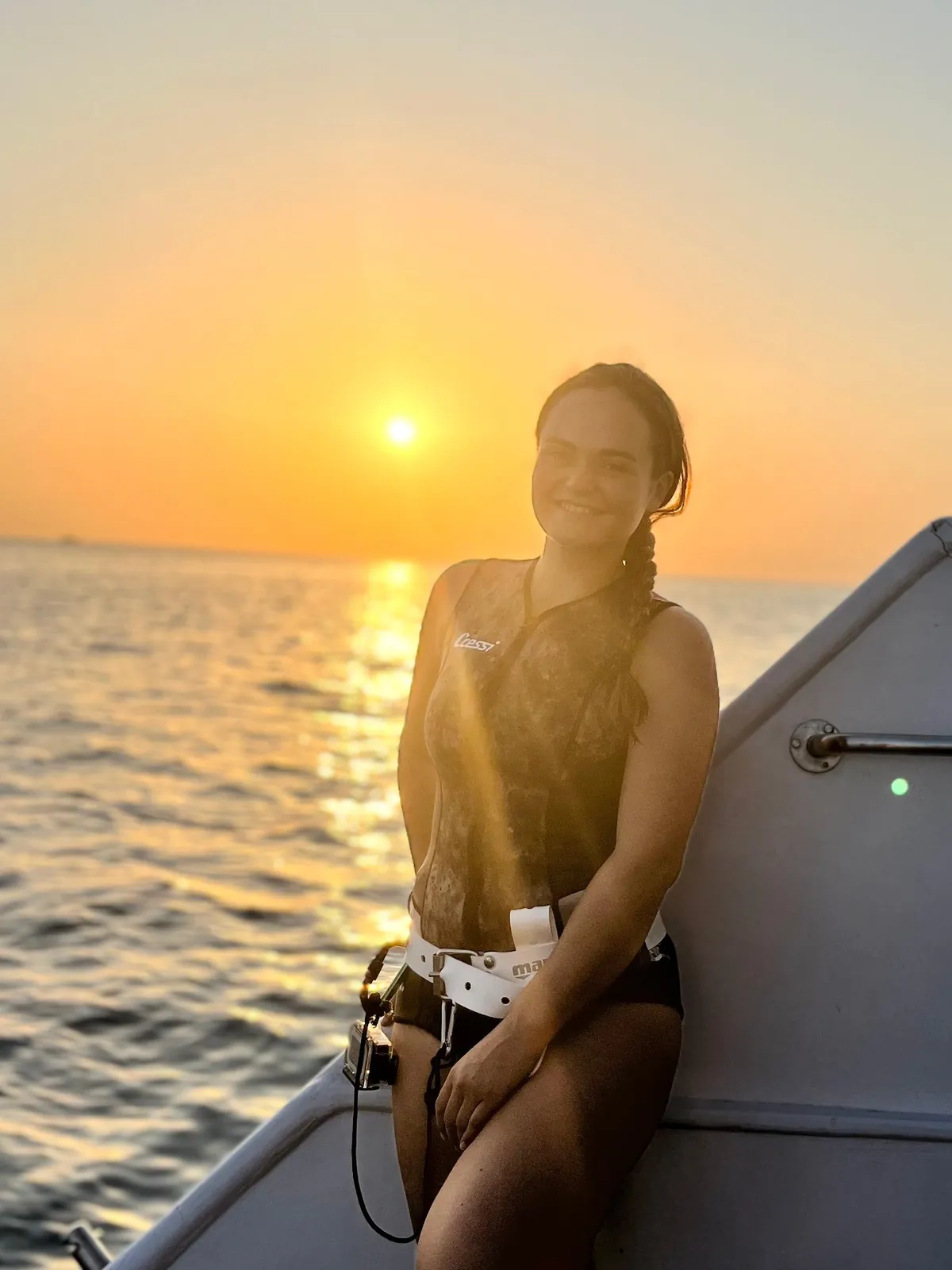
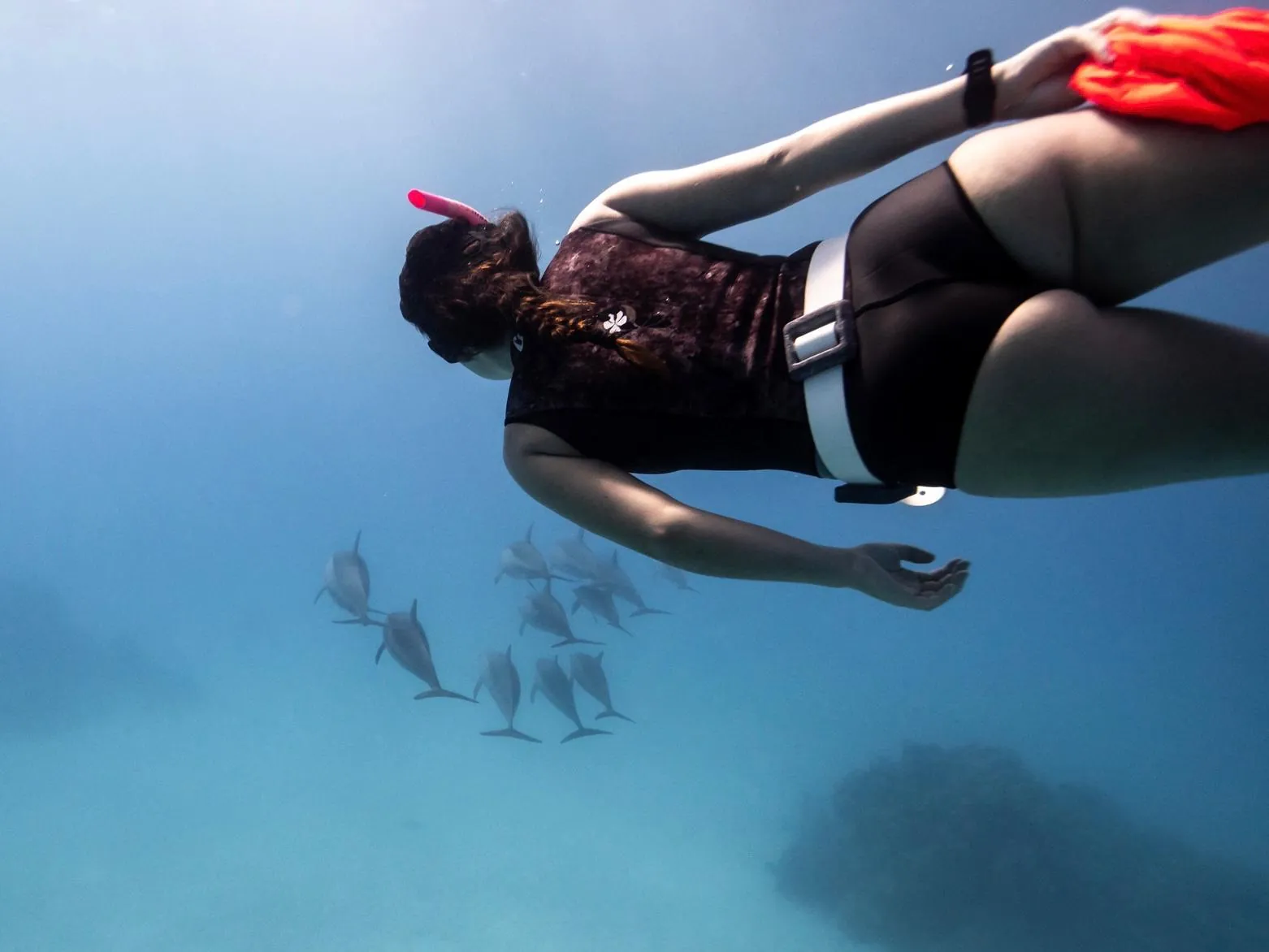
Last year, I started organizing Egypt trips to swim with dolphins.
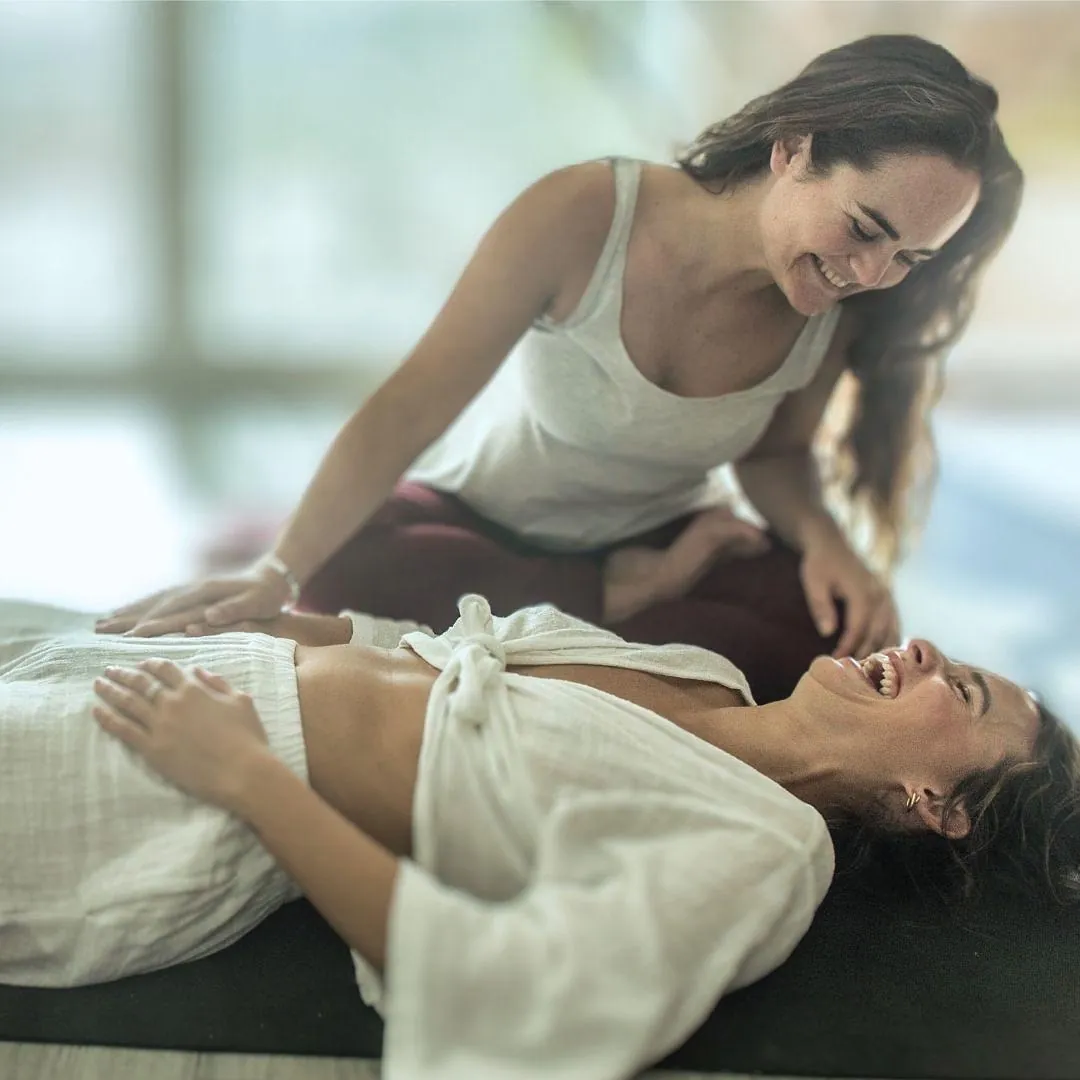
Circular breathing connects you with who you truly are.
A Studio of His Own
Thomas Perroteau on leaving architecture, finding paint, and starting over in Mallorca.
“The artist’s path can be hard, but I’m really happy to be on it because it feels right. Very, very right.”
We visit Thomas during his Open Studios event in Palma to walk among his latest works — abstract yet human-like transfers of paint on canvas, leaning casually against the walls. He shares the space with fellow painter Nieves Guri and his partner, Marion De Racourt, who is a sculptor herself.
Where were you born?
In Paris.
Where did you study?
I first studied architecture in Paris but quit before my senior year to move to Brussels and join art school.
What made you change your mind?
In my third year of architecture, I started painting with a friend in my dorm. It was then that I realised I was more moved by the vibrancy of colour and texture than by design or volume.
Did you ever get your architecture licence?
I never did! When I discovered painting, it was too clear that it was for me. It became a passion, an obsession.
Did you paint when you were a kid?
Not really, maybe twice (laughs). But I grew up surrounded by my grandfather’s paintings. He was a painter too. Not an artist though, he was a decorative painter for churches and monuments, but I’d always been fascinated by them.
What do you like so much about painting?
It feels natural, like an extension of me. Something I identify with. Painting is a language, like writing is for you, or creating volume and sculpture is for Marion.
What technique do you use?
It’s called ‘decoupage’. I cut shapes from painted fabrics and place them on the canvas to act as stencils. Once I’ve painted over them, I remove them, creating a transfer effect. It’s a way to continuously recycle paint by re-stamping.
What was your first big break?
At the end of art school, we had an end-of-year exhibition at Kanal Pompidou, a branch of the Centre Pompidou in Brussels. This got me a lot of visibility. Around 10,000 people visited that day, and I sold about 10 to 15 paintings, which really set me off to a good start.
And after that, did you keep on selling?
No, not really. I moved to Mallorca because of Marion’s work, and then COVID hit. Four exhibitions I had lined up were cancelled, and the network I’d built with collectors in Brussels started fading away.
What did you struggle with the most during that time?
Spending months without a studio. For an artist, having a space to work, to create, is crucial. Being stuck at home feels like trying to swim in a bathtub, you know? And you also need a physical space to showcase your work.
And how did you get through it? Did someone help you?
Yes, thankfully, I made some friends who introduced me to the art scene in Mallorca. It’s easy to connect with other artists here because, since it’s not a huge community, it’s a strong one. We share contacts, ideas, opinions… and support each other. In big cities like Paris, there can be competition between groups within the larger community. Here we’re quite isolated from the rest of the world. Plus, there are a lot of people buying houses here who are interested in buying art.
Do you have a second job?
Sometimes I work as a tour guide in Palma, but I haven’t had to in a while. This year I’ve sold paintings, but it’s tough. Sometimes you can sell four paintings in a month, then nothing for two years. You have to think ahead. That’s how it is for all artists.
Do you ever question being a painter?
No. Selling or not selling doesn’t affect me all that much, honestly. I’m just happy that I get to make a bit of money. What matters to me is feeling connected to what I do, you know? That’s why I love painting, not for the recognition, but for that sense of connection. I think it’s the same for most artists. The artist’s path can be hard, but I’m really happy to be on it because it feels right. Very, very right. The rest… doesn’t matter as much ■
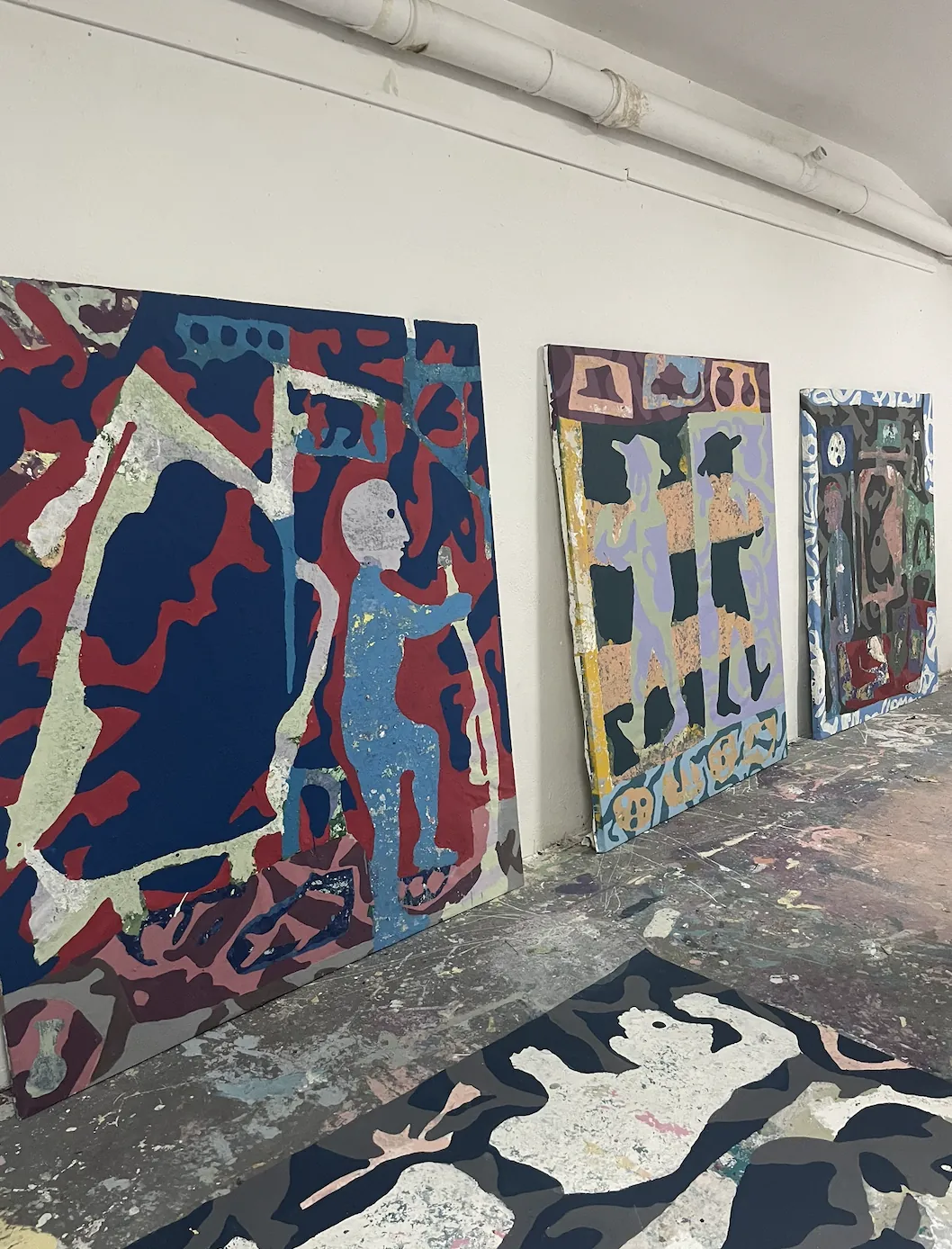
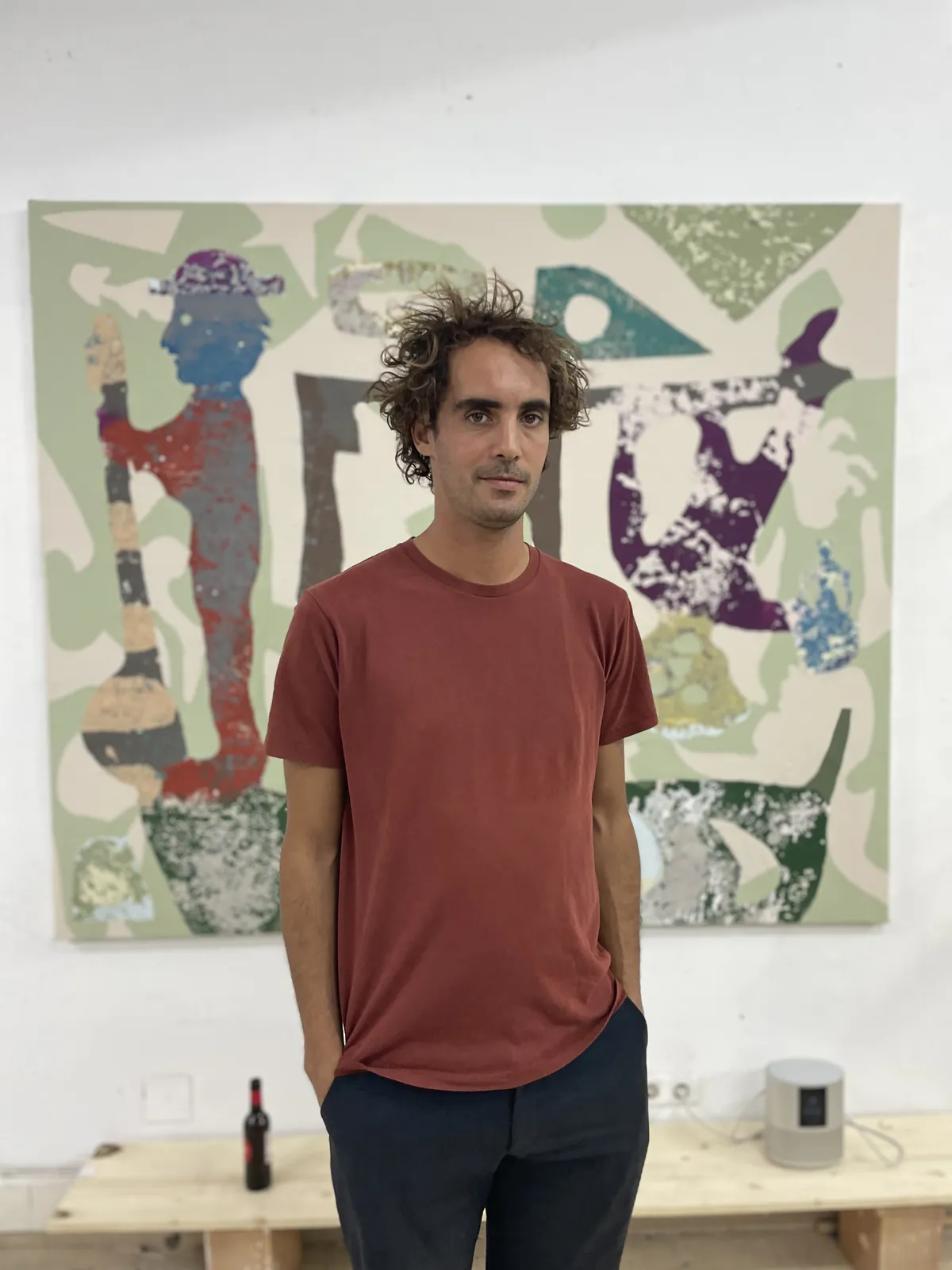
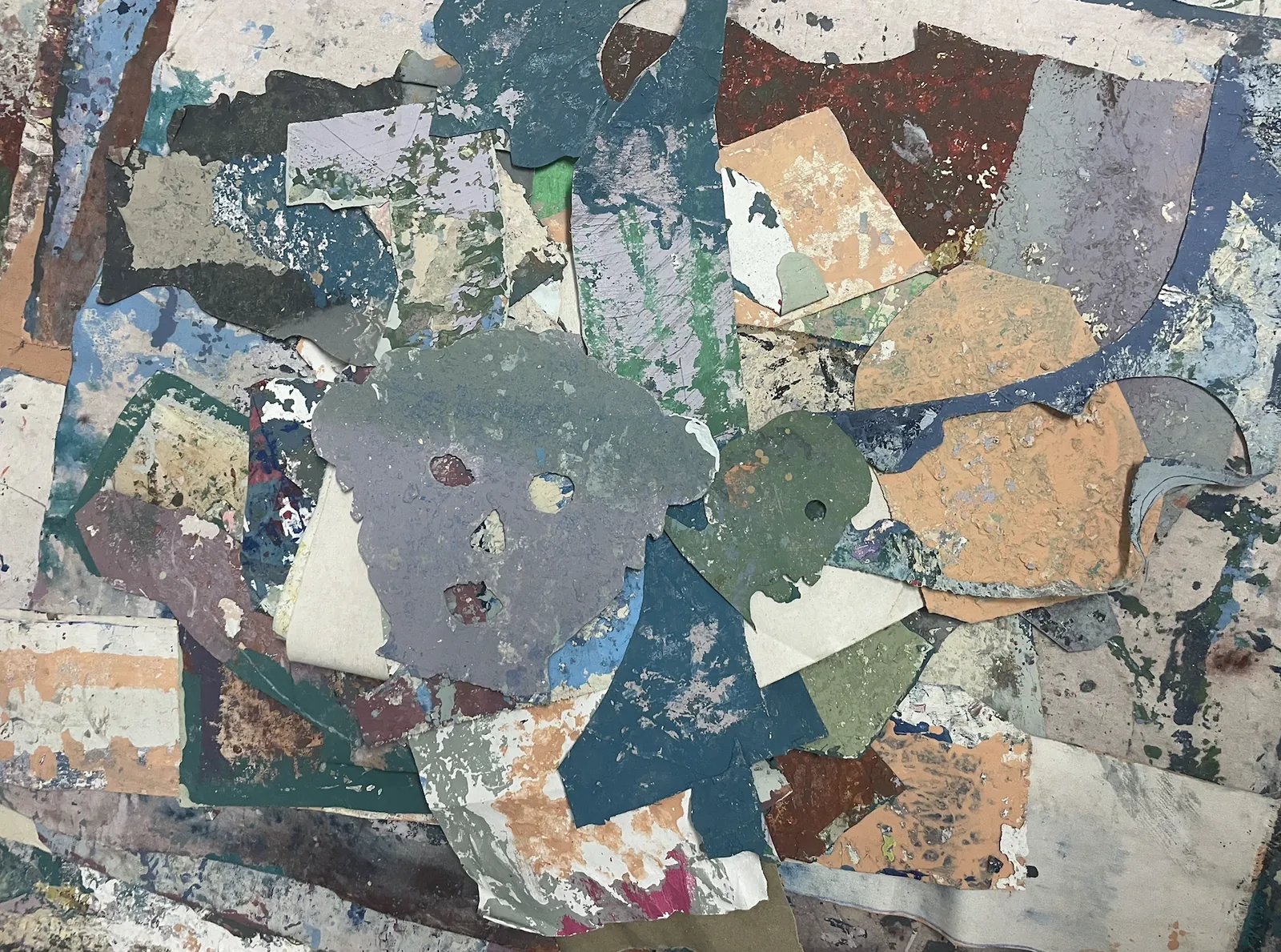
The decoupage technique.